
Drawing: The Timeless Practice That Calms the Mind, Awakens Creativity
✏️ Benefits of Drawing: The Timeless Practice That Calms the Mind, Awakens Creativity & Connects You to Your Inner World
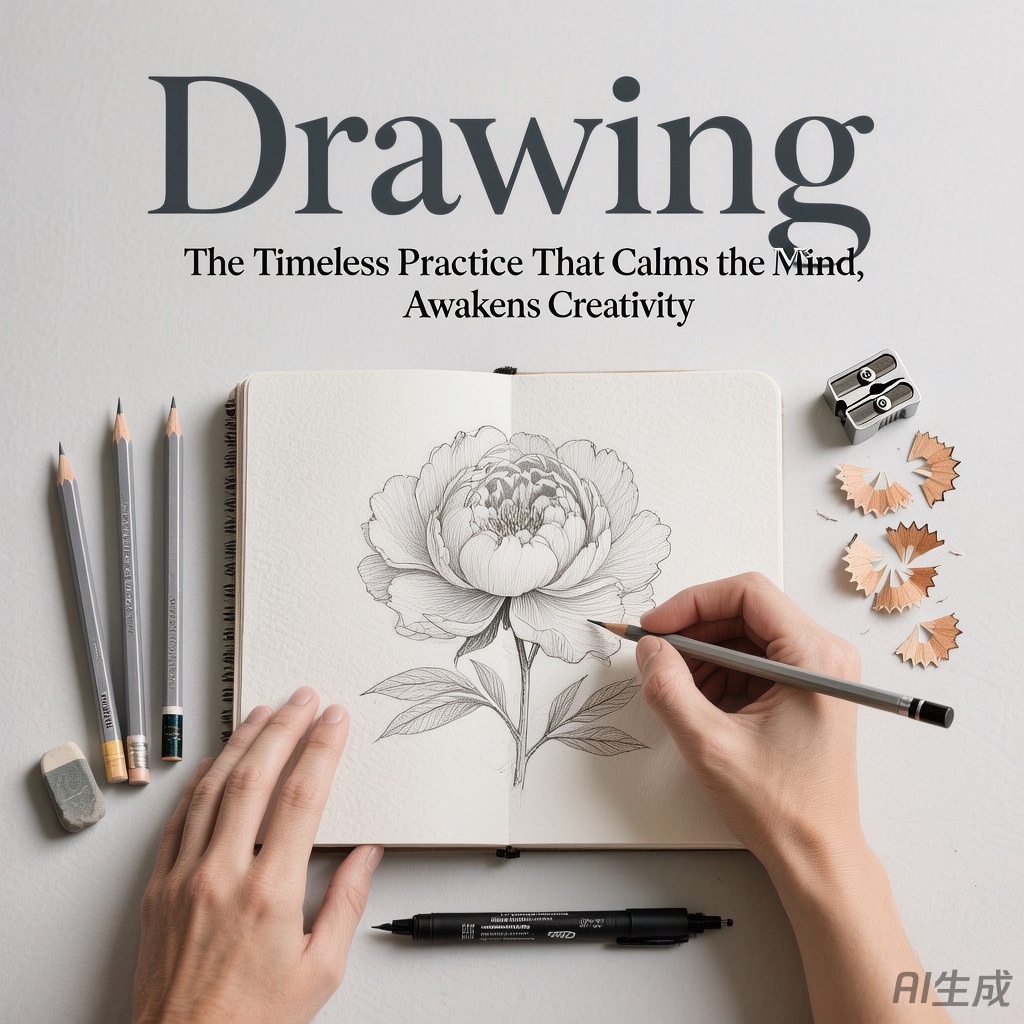
In a world of screens, speed, and endless scrolling, the simple act of putting pencil to paper is a quiet revolution. Drawing isn’t just for artists. It’s a universal human language—as old as cave walls and as relevant as tomorrow’s innovations. From Leonardo da Vinci’s notebooks to a child’s first scribble, drawing has been a tool for seeing, thinking, healing, and remembering. Modern neuroscience now confirms: the act of drawing—whether sketching a face, doodling in a margin, or shading a still life—triggers profound cognitive, emotional, and neurological benefits. It lowers stress, sharpens observation, enhances memory, and unlocks creative problem-solving in ways typing or tapping never can. In an age of digital noise, drawing is a return to presence. And it costs nothing but a pencil and the courage to begin.
At Tips Expensive, we believe true luxury lies not in perfection, but in process. And drawing? It’s mindful creation at its purest. No filters. No likes. Just you, your hand, and the quiet dialogue between eye and page. Whether you draw “well” or not is irrelevant. What matters is that you show up—and in doing so, reclaim a piece of your humanity.
1. Deep Focus & Mental Clarity
Drawing demands presence. To capture a curve, a shadow, or a proportion, your brain must quiet its chatter and enter a state of flow. This sustained attention acts like meditation—slowing brainwave activity and reducing mental fog.
Studies show that just 20 minutes of drawing lowers cortisol and improves concentration for hours afterward. You don’t just draw a leaf—you anchor yourself in the now.
2. Anxiety & Stress Relief—The Silent Therapy
Art therapists have long used drawing to help trauma survivors, veterans, and those with anxiety. Why? Because drawing externalizes inner chaos. A swirl of lines can hold grief. A bold stroke can channel anger.
Unlike verbal processing, which lives in the logical left brain, drawing engages the right hemisphere—where emotion and intuition reside. You don’t need to explain your pain. You give it shape—and in doing so, release its grip.
3. Enhanced Memory & Learning
Students who take notes by hand—and especially those who sketch concepts—retain information 2–3x better than those who type. Drawing forces you to process, simplify, and reconstruct ideas—deepening neural encoding.
Neuroscientists call this the “drawing effect”: the act of drawing something, even poorly, creates a richer memory trace. Your brain doesn’t just store data—it builds a visual story.
4. Creativity & Problem-Solving Awakening
Drawing trains you to see beyond assumptions. To draw a chair, you must observe its angles, light, and negative space—not just label it “chair.” This “beginner’s eye” spills into life: you notice details, question norms, and imagine alternatives.
In innovation labs and design studios, sketching is the first step in solving complex problems. Creativity isn’t magic. It’s trained vision.
5. Emotional Self-Expression Without Words
Not every feeling can be named. But it can be drawn. A storm of scribbles. A delicate flower. A face with closed eyes. Drawing bypasses the pressure to “articulate” and offers a safe container for the unspeakable.
At Tips Expensive, we believe your inner world deserves witness—even if only by your own hand.
6. Improved Observation & Empathy
Learning to draw is learning to see. Portrait artists study micro-expressions. Landscape sketchers note how light bends. This heightened observation extends to people: you notice a friend’s tired eyes, a stranger’s quiet joy.
Drawing doesn’t just sharpen your eye—it opens your heart.
7. Motor Skills & Brain Integration
The hand-eye coordination required in drawing strengthens neural pathways between the brain’s hemispheres. For children, it supports cognitive development. For adults, it maintains fine motor control and may delay age-related decline.
Every line is a tiny act of brain-body harmony.
8. A Ritual of Quiet, Mindful Luxury
At Tips Expensive, we honor practices that slow time. Lighting a lamp, opening a sketchbook, sharpening a pencil—it’s a sanctuary in a rushed world.
True luxury includes slowness. And drawing rewards those who begin without judgment: no masterpiece required, no audience needed. Just curiosity. Because the goal isn’t to create art. It’s to become more awake.
Drawing is proof that healing often happens in silence—with a pencil, not a pill. It doesn’t demand talent. It invites attention. In an age of distraction and digital overload, this ancient practice remains a timeless testament to the power of seeing, creating, and being fully human.
So today—yes, today—grab a pencil. Sketch your coffee cup. Doodle the clouds. Trace the lines of your hand. Let your imperfect lines remind you: you are here. You are creating. And that, in itself, is enough.


Comments